
Agriculture and Rural Development


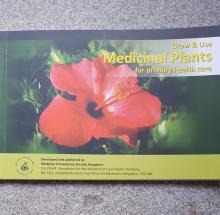
Title: Grow & Use Medicinal Plants for Primary Health Care
Author: Experts of FRLHT and MCS
Publisher: Medplan Conservatory Society (MCS), Bengaluru
Year: 2009 Pg: 88 Rs. 80/-
We depend upon plants for our health care to a large extent. By spending their lifetime, our ancestors have found out and documented the healing properties of various plants growing in the neighbourhood. This cumulative knowledge has been meticulously passed on to generations through oral and codified traditions.
We are fortunate because we are present custodians of this collective wisdom. Different communities of India now know the use of more than 7,500 plant species (out of rich flora of India with about 8,000 botanical entities) to treat various ailments. It is our responsibility to maintain this invaluable knowledge treasure and ensure its transmission to our next generations.
We should accept the fact that the best quality medicinal plants are those derived from a home garden. They have a time-tested potential to provide a ready-at-hand solution to many of the primary ailments or health disorders.
Therefore, this book explaining common health problems and the use of 40 plants in their treatment is a welcome publication from MCS. The guide contains colour photos of 22 plants for easy identification.
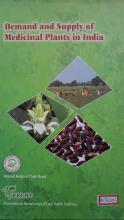
Title: Demand and Supply of Medicinal Plants in India
Authors: D.K Ved and G.S. Goraya
Publishers: FRLHT, Bengaluru and Bishen Singh Mahendra Pal Singh, Dehra Dun
Year: 2008 Pg.216 Rs.1,250/-
Medicinal plants are not only a major resource base for the traditional medicine & herbal industry but also provide livelihood and health security to a large segment of Indian population.
Information drawn from the published records on codified Indian Systems of Medicine (Ayurveda, Siddha, Unani, Swarigpa and Homoeopathy) and ethno-medicinal practices in the country reveals that about 6,000 plants species are used in the Indian health care traditions. It is also a matter of record that more than 9,000 registered manufacturing units are engaged in making herbal based formulations the country.
In this scenario it becomes important to know the number of medicinal plant species being consumed by the herbal manufacturing units, the quantum of such consumption and the gaps in the demand and supply of the medicinal plants.
Therefore, a study was sponsored by National Medicinal Plants board (NMPB), through the Foundation for Revitalisation of Local Health Traditions (FRLHT), Bengaluru with the objective of finding answers to issues related to demand and supply of medicinal plants in the country. This boo presents report of the study.
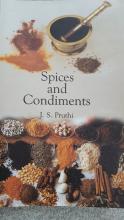
Title: Spices and Condiments
Author: J. S. Pruthi
Published by: National Book Trust, India, New Delhi
Pages: 322 Rs.160/- First Edition: 1976, 5th: 1998 Reprints:4
This popular book covers the nomenclature, description, distribution, composition and uses of 86 spices. The book has also been translated into several Indian languages.
The various uses of spices in foods and beverages as flavourings, in medicine, and in perfumery and cosmetics are described in the book. It also covers the PFA quality standards for spices, as well as lists of other national (Agmark, ISI or BSI) and international (ISO) standards for spices, their products and their methods of test.
In ancient times, spies ranked with precious stones in the inventory of royal possessions and were monopolised by the few. Even today, spices and condiments play an important role in the national economies of several spice producing, importing and exporting countries. There is considerable volume of international trade in spices.
India is considered to be the “Home of Spices”. It is one of the major spice producing and exporting countries of the world. From 1980 to 1996-97, the increase in the foreign exchange earnings, by the export of spices was 1,200%.
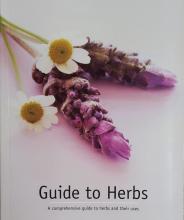
Title: Guide to Herbs
Author: Jenny Linford
Publisher: Parragon, 4 -Queen Street, UK
Year: 2012 Pages: 144 (Printed in Art Paper) ISBN 978-1-4454-6989-8
Herbs are very versatile plants. Their wonderful scents, colours and flavours have been used by generations of human beings for thousands of years in cooking and cosmetics and for dyeing fabrics. They have always been known for their healing properties. Even now, scientists are still discovering why some herbs are very potent healers.
This “Guide to Herbs” contains a wealth of information about more than 100 of the world’s most widely used herbs. With the help of superb colour photographs and useful fact-boxes, the reader can learn about the appearance, origins and habitat of each herb. Medicinal, culinary and cosmetic uses (both traditional and contemporary) of the herbs are also presented in the guide.
Botanists use the term “herb” to refer to a plant with a stem that is not woody, yet the term has taken on a larger meaning. An experienced cook would consider herb as a plant used to add flavour in cooking, such as basil. On the other hand, many people may consider herbs to be plants that are extensively used medicinally, such as aloe vera.
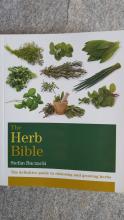
Title: The Herb Bible
Author: Stefan Buczacki
Publisher: Octopus Publishing Group Ltd., London
Year: 2015 Pg. 320 Rs.750/-
This attractive book presents information on 130 herbs by horticultural expert Stefan Buczacki. There is at-a-glance information on these herbs with advice on how to grow and their best uses - both culinary and ornamental.
In the first 33 pages, useful information on these aspects is given: Site and Soil suitable for herbs, Design and Styles of Herb Gardens, Plants and Planting, After-care and Propagation, Picking and Preserving herbs, Pest and Diseases Control. At the end, index is given in six pages.
However, this is a gardening book and not a cookbook or herbal medicinal book. It is written from the standpoint of a gardener who wants to grow a range of herbs to use in the kitchen but who also has an interest in those many others with medicinal roles. So, while general kitchen use have been indicated, recipes are not given. Details of the way that the herb plants are prepared for medicinal use are also not given.
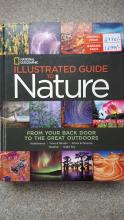
Title: Illustrated Guide to Nature
Authors: Catherine Herbert, Bland Crowder and others
Publisher: National Geographic Society, Washington, USA
Year: Pages: 448 Art Paper Rs:1299/-
Studies conducted at the University of Kansas show the benefit of spending more time in nature. Testing the theory that “nature has specific restorative effects on the prefrontal cortex” - the part of the brain responsible for creativity and planning - the researchers gave a standardised problem - solving test to backpackers aged 18 to 60, before and after a four-day sojourn into the wilderness. Campers returning scored 50 percent higher.
Why? “Nature is a place where our mind can rest, relax and let down those threat responses,” says Ruth Ann Atchley, lead investigator. When we spend time in nature, Atchley, proposes, “we have resources left over - to be creative, to be imaginative, to problem-solve - that allow us to be better, happier people who engage in a more productive way with others.”
This richly illustrated volume is an excellent guide to the amazing views and vistas of North America’s natural world. It is designed to invite people, young and old, to step with greater pleasure into the out-of-doors. The purpose of the book is to educate and entertain.
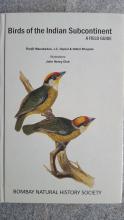
Title: Birds of the Indian Subcontinent - A Field Guide
Authors: Ranjit Manakadan, J.C. Daniel & Nikhil Bhopale
Publisher: Bombay Natural History Society
Year: 2011 Pg. 412 Rs. 550/-
Specific identification is the basis of meaningful bird watching as much as of scientific field research. Howsoever significant a field observation, its importance is lost unless the concerned species is correctly identified. For the untutored beginner, good illustrations of birds, preferably in colour, are fundamental.
The truth of this was clearly demonstrated by Hugh Whistler’s pioneering “Popular Handbook of Indian Birds” first published in 1928, in creating and developing an interest in birds and birdwatching among the Indian public. It became so popular that second edition of the book had to be published in 1935, followed soon by a third and forth editions.
Then, the BNHS first published “The Book of Indian Birds” by Salim Ali describing 181 species of the commoner birds, all of which were shown in colour. The popularity of this book, largely due to this feature, enabled it to produce further editions every few years, each edition enlarged progressively by the inclusion of a few more species, till the latest, the 13th, published in 2002 containing the accounts and colour illustrations of 538species.

Title: A Telling Tale of Jain Watershed Project
Author: Bhavarlal H. Jain
Publisher: Jain Irrigation Systems Ltd., Bambhori, Jalgaon 425001
Year: 2003, 2011 (2nd Edition - 5,000 copies) Pg. 158 Rs.220/-
Water is scarce and water resources are depleting all over the world. Every year we hear tales of terrible drought and human suffering from different parts of the world. In such a situation here is a tale of transformation of 650 acres dry land into “Paradise on Earth” with lush green trees and crops through watershed development.
Watershed development programmes assume greater significance, both for the Government and the farming community. Despite keen interest by all concerned, the progress is very slow mainly due to low investment in water sector, especially, irrigation projects. Some projects are successful where NGOs, through the involvement of local community, implement such projects.
However, the Jain Watershed development Project is an atomistic model, where the co-operation of the neighbouring farmers is not required as a large area is under one ownership. Anyhow, every watershed, large or small, does create enduring value.
The present document is an effort to make a focussed analysis and evaluation of the project that Bhavarlal Jain undertook as early as 1995. After two decades, the fruits of systematic implementation is there for everyone to see.
ಮುಂಬೈಯ “ಕ್ಯಾಂಡಿ ಆಂಡ್ ಗ್ರೀನ್” ರೆಸ್ಟೊರೆಂಟಿನ ವಿಶೇಷತೆ ಅರಳು ಹೂಗಳು ತುಂಬಿದ ಆಹಾರ. ಅದರ ಮಾಲಕಿ ೨೫ ವರುಷ ವಯಸ್ಸಿನ ಶ್ರದ್ಧಾ ಬನ್ಸಾಲ್. ಆಕೆಗೆ ಯಾವತ್ತೂ ಒಂದೇ ಯೋಚನೆ. ತಾನು ತಯಾರಿಸುವ ಸಲಾಡುಗಳು, ಕೇಕುಗಳು ಹಾಗೂ ಪಾನೀಯಗಳಲ್ಲಿ ಬೇರೆಬೇರೆ ಹೂಗಳನ್ನು ಸೇರಿಸುವುದು ಹೇಗೆ?
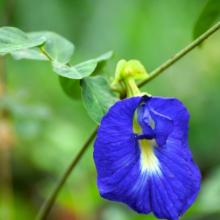
ಆಹಾರವಾಗಿ ಆಕೆಯ ಅಚ್ಚುಮೆಚ್ಚಿನ ಹೂಗಳು ನೀಲಿ ಶಂಖಪುಷ್ಪ (ಅಪರಾಜಿತ) ಮತ್ತು ಹೊಳಪು ಕಿತ್ತಳೆ ಬಣ್ಣದ ನಾಸ್ಟರ್-ಶಮ್. ಪೋಷಕಾಂಶಗಳು ತುಂಬಿರುವ ಈ ಹೂಗಳ ಬಣ್ಣಗಳಿಂದಾಗಿ ಪ್ಲೇಟಿನಲ್ಲಿರುವ ಆಹಾರಕ್ಕೆ ಒಂದು ಝಲಕ್. ಹಾಗಾಗಿ, ಆಹಾರಕ್ಕೆ ಕೃತಕ ಬಣ್ಣ ಅಥವಾ ಪರಿಮಳ ವಸ್ತುಗಳನ್ನು ಆಕೆ ಸೇರಿಸುವುದಿಲ್ಲ.
ಪಾಕಪರಿಣತರು ತಾವು ತಯಾರಿಸುವ ಸಲಾಡುಗಳು, ಕೇಕುಗಳು ಮತ್ತು ಪಾನೀಯಗಳಲ್ಲಿ ಹೂಗಳನ್ನು ಹೆಚ್ಚೆಚ್ಚಾಗಿ ಬಳಸುವುದು ಕಳೆದ ೨ – ೩ ವರುಷಗಳ ಹೊಸ ಟ್ರೆಂಡ್. ಅದೇನಿದ್ದರೂ, ಆಹಾರ ತಯಾರಿಯಲ್ಲಿ ಹೂಗಳ ಬಳಕೆ ನಮ್ಮ ದೇಶದ ಪರಂಪರೆ. ಅಡುಗೆಯಲ್ಲಿ ಸಾಂಬಾರ ಪದಾರ್ಥವಾಗಿ ಬಳಕೆಯಾಗುವ ಲವಂಗ ಒಣಗಿದ ಹೂಮೊಗ್ಗು ತಾನೇ? ಹಾಗೆಯೇ, ಆಹಾರವಾಗಿ ಹೂಕೋಸು ಮತ್ತು ಬಾಳೆಹೂಗಳ ಬಳಕೆ ಸರ್ವೇ ಸಾಮಾನ್ಯ. ಆಹಾರಕ್ಕೆ ಬಣ್ಣ ಮತ್ತು ಪರಿಮಳ ನೀಡಲಿಕ್ಕಾಗಿ ಗುಲಾಬಿ, ಕೇಸರಿ ಮತ್ತು ಮಲ್ಲಿಗೆ ದಳಗಳ ಬಳಕೆ ಜನಜನಿತ.
ಈಗ ಬೇರೆ ಹೂಗಳೂ ಆಹಾರದ ವರ್ಣಮಯ ಲೋಕದಲ್ಲಿ ಮುಂಚೂಣಿಗೆ ಬರುತ್ತಿವೆ. ಉದಾಹರಣೆಗೆ ಶಂಖಪುಷ್ಪ. ಹಲವಾರು ಮನೆಗಳಲ್ಲಿ ಬೆಳೆಸುವ ನೀಲಿ ಶಂಖಪುಷ್ಪದ ಬಳ್ಳಿಗಳಲ್ಲಿ ಅರಳುವ ಹೂಗಳ ಚಂದ ಹಲವರಿಗೆ ಗೊತ್ತು. ಆದರೆ, ಆಹಾರವಾಗಿ ಬಳಸಿದಾಗ ಇದರ ಮ್ಯಾಜಿಕ್ ಬಗ್ಗೆ ಕೆಲವರಿಗೆ ಮಾತ್ರ ಗೊತ್ತು. ಲಿಂಬೆಹಣ್ಣಿನ ಪಾನೀಯಕ್ಕೆ ಐದಾರು ನೀಲಿ ಶಂಖಪುಷ್ಪ ಹೂಗಳ ರಸ ಸೇರಿಸಿ; ಆ ಪಾನೀಯ ನೇರಳೆ ಬಣ್ಣದಲ್ಲಿ ಝಗಮಗಿಸುವುದನ್ನು ನೋಡಿ.
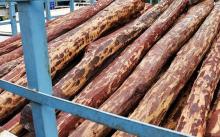
ಸರಕಾರ ತನ್ನ ನೀತಿಯನ್ನು ಹೇಗೆ ಗೋಜಲಾಗಿಸುತ್ತದೆ ಮತ್ತು ಅದರಿಂದ ಕೃಷಿಕರಿಗೆ ಆಗುವ ಸಂಕಟಗಳಿಗೆ ಒಂದು ತಾಜಾ ಉದಾಹರಣೆ ಕೆಂಪು ಚಂದನ ಬೆಳೆಸಿದ ಕೃಷಿಕರ ಬವಣೆ.
ತಮಿಳುನಾಡಿನ ಕೃಷ್ಣಗಿರಿ ಜಿಲ್ಲೆಯಲ್ಲಿ ೧೯ ಹೆಕ್ಟೇರಿನಲ್ಲಿ ಕೆಂಪು ಚಂದನ (ರಕ್ತ ಚಂದನ) ನೆಟ್ಟು, ೨೦ ವರುಷ ಬೆಳೆಸಿರುವ ಆರ್.ಪಿ. ಗಣೇಶನ್ ಕೈತುಂಬ ಆದಾಯದ ಕನಸು ಕಂಡಿದ್ದರು. ಇದೀಗ ತಲೆಗೆ ಕೈಕೊಟ್ಟು ಚಿಂತಿಸುತ್ತ ಕುಳಿತಿದ್ದಾರೆ.
ಯಾಕೆಂದರೆ, ಕಳೆದ ಎರಡು ವರುಷಗಳಿಂದ ಅವರು ಕೆಂಪು ಚಂದನದ ಮರಗಳನ್ನು ಮಾರಾಟ ಮಾಡಲು ಪ್ರಯತ್ನಿಸುತ್ತಿದ್ದಾರೆ. ಆದರೆ ಅವನ್ನು ಖರೀದಿಸಲು ಯಾರೂ ತಯಾರಿಲ್ಲ! ಡಾಬರ್, ಪತಂಜಲಿ ಇತ್ಯಾದಿ ಕಂಪೆನಿಗಳನ್ನೂ ಅವರು ಸಂಪರ್ಕಿಸಿದ್ದಾರೆ; ಅವರೆಲ್ಲರೂ ಕೆಂಪು ಚಂದನ ಖರೀದಿಸಲು ನಿರಾಕರಿಸಿದ್ದಾರೆ. ಕಾರಣ: ಕೆಂಪು ಚಂದನ ಆಡಳಿತಷಾಯಿಯ ಕೆಂಪುಪಟ್ಟಿಯಲ್ಲಿ ಸಿಲುಕಿಕೊಂಡಿದೆ; ಹಾಗಾಗಿ ಮರಕಡಿಯುವ ಪರವಾನಗಿ ಪಡೆಯುವುದು ಸುಲಭವಲ್ಲ. “ಬೇರೆಬೇರೆ ರಾಜ್ಯಗಳಲ್ಲಿ ಬೇರೆಬೇರೆ ನಿಯಮಗಳಿವೆ. ಕೇರಳದ ಕಂಪೆನಿಯೊಂದು, ಕೆಂಪು ಚಂದನ ಖರೀದಿಸ ಬೇಕಾದರೆ ಸಿಐಟಿಇಎಸ್ (ಕನ್-ವೆನ್ಷನ್ ಆನ್ ಇಂಟರ್-ನ್ಯಾಷನಲ್ ಟ್ರೇಡ್ ಇನ್ ಎನ್-ಡೆಂಜರ್ಡ್ ಸ್ಪಿಷೀಸ್ ಆಫ್ ವೈಲ್ಡ್ ಫಾನಾ ಆಂಡ್ ಫ್ಲೋರಾ) ಸರ್ಟಿಫಿಕೇಟ್ ಕೇಳಿತು” ಎನ್ನುತ್ತಾರೆ ಗಣೇಶನ್.
ಇದೆಲ್ಲ ಏನು? ಎಂಬುದು ಅರ್ಥವಾಗ ಬೇಕಾದರೆ ಕೆಂಪು ಚಂದನದ ಬಗ್ಗೆ ಸರಕಾರದ ದ್ವಂದ್ವನೀತಿ ತಿಳಿಯಬೇಕು. ಕೃಷಿಕರು ಕೆಂಪು ಚಂದನ ಬೆಳೆಯಿರಿ ಎಂದು ಪ್ರೋತ್ಸಾಹಿಸುತ್ತದೆ ಸರಕಾರ. ಆದರೆ, ಅದನ್ನು ಕಡಿಯಲು ಮತ್ತು ಸಾಗಾಟ ಮಾಡಲು ಪರವಾನಗಿ ಅಗತ್ಯ. ಈ ಪರವಾನಗಿ ಪಡೆಯುವುದು ಬಹಳ ಕಷ್ಟ.