
Agriculture and Rural Development



ಶಶಿಶೇಖರ್ ಪಾಠಕ್ ಮುಂಬೈಯಲ್ಲಿ ತಮ್ಮ ಬೈಸಿಕಲಿನಲ್ಲಿ ಸವಾರಿ ಹೊರಟರೆ, ಪ್ರತಿಯೊಂದು ಟ್ರಾಫಿಕ್ ಲೈಟ್ ಜಂಕ್ಷನಿನಲ್ಲಿ ಜನರು ಕುತೂಹಲದಿಂದ ನೋಡುವುದು ಅವರ ಬೈಸಿಕಲನ್ನು. ಆಗ “ಇದು ಬಿದಿರಿನ ಬೈಸಿಕಲ್” ಎಂದು ಶಶಿಶೇಖರ್ ಹೇಳುತ್ತಿರುವಂತೆ ಅಚ್ಚರಿಯಿಂದ ಕಣ್ಣರಳಿಸುತ್ತಾರೆ ನೋಡುಗರು.
“ಬಿದಿರಿನಿಂದ ಬೈಸಿಕಲ್ ಮಾಡಲಿಕ್ಕಾಗುತ್ತದೆಯೇ?” ಎನ್ನುತ್ತಾ ನೋಡುಗರು ಇವರ ಬೈಸಿಕಲನ್ನು ಕೈಯಿಂದ ತಟ್ಟಿ ನೋಡುತ್ತಾರೆ. ಅದು ನಿಜಕ್ಕೂ ಬಿದಿರಿನ ಬೈಸಿಕಲ್ ಎಂಬುದು ಖಚಿತವಾಗುತ್ತಿದ್ದಂತೆ, ನೋಡುಗರ ಮುಖದಲ್ಲೊಂದು ಸಮಾಧಾನದ ಭಾವ.
ಇದೀಗ ಐದು ವರುಷಗಳಿಂದ ಶಶಿಶೇಖರ್ ಬಿದಿರಿನ ಬೈಸಿಕಲುಗಳನ್ನು ತಯಾರಿಸುತ್ತಿದ್ದಾರೆ. ಈ ಗೃಹ ಉದ್ದಿಮೆಗೆ ಅವರಿಟ್ಟ ಹೆಸರು “ಬಾಂಬೂಚಿ”.
ಇದೆಲ್ಲ ಶುರುವಾದದ್ದು ೨೦೧೩ರಲ್ಲಿ – ಪುಣೆಯ ದಕ್ಷಿಣ ದಿಕ್ಕಿನಲ್ಲಿ ಭೋರ್ ತಾಲೂಕಿನ ಮೂಲೆಯಲ್ಲಿ ಶಶಿಶೇಖರ್ ಒಂದು ತುಂಡು ಜಮೀನು ಖರೀದಿಸಿದಾಗ. ಅಲ್ಲಿ ಎತ್ತಕಂಡರತ್ತ ಬಿದಿರುಮೆಳೆಗಳು. ಶಶಿಶೇಖರ್ ಮತ್ತು ಪತ್ನಿ ದೇವಿಕಾ ಈ ಬಿದಿರನ್ನು ಚೆನ್ನಾಗಿ ಬಳಸಲು ನಿರ್ಧರಿಸಿದರು.
ಬಿದಿರಿನಿಂದ ಮೇಜು – ಕುರ್ಚಿ – ವಸ್ತುಗಳನ್ನಿಡುವ ನಿಲುಗಂಬ ತಯಾರಿಸೋಣ ಎಂಬ ಯೋಚನೆ ಅವರಿಗೆ. ಆದರೆ, ಈಗಾಗಲೇ ಹಲವಾರು ಘಟಕಗಳು ಇವನ್ನು ತಯಾರಿಸುತ್ತಿರುವ ಕಾರಣ ಆ ಯೋಚನೆ ಕೈಬಿಟ್ಟರು. ಅದೊಂದು ದಿನ ಟೆಲಿವಿಷನ್ ಕಾರ್ಯಕ್ರಮ ನೋಡುತ್ತಿದ್ದಾಗ ಒಂದು ಬಿದಿರಿನ ಬೈಸಿಕಲ್ ಕಾಣಿಸಿತು. ತಕ್ಷಣವೇ ಪಾಠಕ್ ದಂಪತಿ ನಿರ್ಧರಿಸಿದರು: ಇದುವೇ ನಮ್ಮ ಮುಂದಿನ ಯೋಜನೆ ಎಂದು.
ಭಾರತೀಯ ವಾಯುದಳದ ಮಾಜಿ ಪೈಲೆಟ್ ಶಶಿಶೇಕರ್, ಈಗಲೂ ಆಗಾಗ ಬೇರೆ ವಿಮಾನಗಳ ಚಾಲನೆ ಮಾಡುತ್ತಿದ್ದಾರೆ; ಅವರ ಬಿಡುವಿನ ಸಮಯವೆಲ್ಲ ಬಿದಿರಿನ ಬೈಸಿಕಲ್ ತಯಾರಿಗೆ ಮೀಸಲು.

ದೇಶದ ರಾಜಧಾನಿ ಡೆಲ್ಲಿಯಲ್ಲಿ ಎಲ್ಲರಿಗೂ ಉಸಿರುಗಟ್ಟುತ್ತಿದೆ. ಅಲ್ಲಿ ಎಲ್ಲೆಡೆ ಹೊಗೆ ತುಂಬಿದೆ. ಬಹುಪಾಲು ಜನರು ಮೂಗಿಗೆ ಕವಚ ಕಟ್ಟಿಕೊಂಡು ಓಡಾಡುತ್ತಿದ್ದಾರೆ. ಈಗ ೨೦೧೨ನೇ ಇಸವಿಯಿಂದ ಇಂತಹ ಅಸಹನೀಯ ಪರಿಸ್ಥಿತಿ ಅಕ್ಟೋಬರ್ – ನವಂಬರ್ ತಿಂಗಳುಗಳಲ್ಲಿ ಮರುಕಳಿಸುತ್ತಿದೆ.
ಇದಕ್ಕೆ ಮುಖ್ಯ ಕಾರಣ ಪಂಜಾಬ್ ಮತ್ತು ಹರಿಯಾಣ ರಾಜ್ಯಗಳಲ್ಲಿ, ಭತ್ತದ ತೆನೆ ಕೊಯ್ಲಿನ ನಂತರ ಉಳಿಯುವ ಹುಲ್ಲಿಗೆ ಬೆಂಕಿ ಕೊಟ್ಟು ಸುಡುತ್ತಿರುವುದು. ಕೆಲಸದಾಳುಗಳಿಂದ ಅಥವಾ ಯಂತ್ರಗಳಿಂದ ಆ ಹುಲ್ಲನ್ನು ಕೊಯ್ಯುವ ವೆಚ್ಚ ಭರಿಸಲು ತಯಾರಿಲ್ಲದ ರೈತರು ಅದನ್ನು ಸುಟ್ಟು ಹಾಕುತ್ತಾರೆ. ರೈತರ ಈ ಅಭ್ಯಾಸವನ್ನು ನಿಲ್ಲಿಸಲು ಹಲವು ಕ್ರಮಗಳನ್ನು ಕೈಗೊಳ್ಳಲಾಗಿದೆ; ಅವುಗಳಿಂದ ಹೆಚ್ಚೇನೂ ಪ್ರಯೋಜನವಾಗಿಲ್ಲ. ಸರಕಾರಗಳ ವಿನಂತಿ ಮತ್ತು ದಂಡಕ್ಕೆ ಬೆಲೆಯಿಲ್ಲದಂತಾಗಿದೆ. ಹೊಲದ ಹುಲ್ಲು ಕತ್ತರಿಸುವ ಯಂತ್ರಗಳಿಗೆ ಸಬ್ಸಿಡಿ ನೀಡುವ ಕೇಂದ್ರ ಸರಕಾರದ ಯೋಜನೆಯೂ ನೆಲ ಕಚ್ಚಿದೆ. ಹಾಗಾಗಿ, ಡೆಲ್ಲಿ ಮತ್ತು ಸುತ್ತಲಿನ ಉತ್ತರ ಭಾರತದ ವಿಶಾಲ ವಲಯದಲ್ಲಿ ವಿಷಭರಿತ ಹೊಗೆಮಂಜು ಕವಿದಿದೆ.
ಇಂತಹ ಪರಿಸ್ಥಿತಿಯಲ್ಲಿ, ಹುಲ್ಲಿನಿಂದ ಬಹು-ಉಪಯೋಗಿ ತಟ್ಟೆ-ಲೋಟ ತಯಾರಿಸುವ ಮೂರು ಆವಿಷ್ಕಾರಗಳು ಆಶಾದಾಯಕ ಬೆಳವಣಿಗೆ.
ಐಐಟಿ, ಹೊಸದಿಲ್ಲಿಯ ಮೂವರು ಪದವೀಧರರು ಒಂದು ಯಂತ್ರ ರೂಪಿಸಿದ್ದಾರೆ. ಇದು, ರೈತರು ಹುಲ್ಲು ಕತ್ತರಿಸಲು ಪ್ರೇರಣೆ ಆದೀತು. ಅಂಕುರ್ ಕುಮಾರ್, ಕನಿಕ ಪ್ರಜಾತತ್ ಮತ್ತು ಪ್ರಚೀರ್ ದತ್ತ – ಇವರು ರೂಪಿಸಿದ ಆ ಯಂತ್ರ ಭತ್ತದ ಹುಲ್ಲನ್ನು ನಾರಿನ ವಸ್ತುವಾಗಿ ಪರಿವರ್ತಿಸುತ್ತದೆ. ತಟ್ಟೆ, ಲೋಟ ಉತ್ಪಾದಿಸುವ ಘಟಕಗಳಿಗೆ ಈ ನಾರಿನ ವಸ್ತು ಉತ್ತಮ ಕಚ್ಚಾಮಾಲು. ಭತ್ತದ ಹುಲ್ಲಿನಲ್ಲಿ ಸಿಲಿಕಾ ಅಂಶ ಅಧಿಕ; ಇದರಿಂದಾಗಿ ಭತ್ತದ ಹುಲ್ಲು ಕೊಳೆಯುವುದು ನಿಧಾನ.
“ನಮ್ಮ ಯಂತ್ರ ಪರಿಸರಸ್ನೇಹಿ ರಾಸಾಯನಿಕ ಬಳಸಿ, ಭತ್ತದ ಹುಲ್ಲಿನಿಂದ ಸಿಲಿಕಾವನ್ನು ಬೇರ್ಪಡಿಸುತ್ತದೆ; ಆಗ ಭತ್ತದ ಹುಲ್ಲು ಮೆದುವಾಗಿ, ಬೇರೆ ಬಳಕೆಗೆ ಸೂಕ್ತವಾಗುತ್ತದೆ” ಎನ್ನುತ್ತಾರೆ ಅಂಕುರ್ ಕುಮಾರ್. ಆ ರಾಸಾಯನಿಕದ ವಿವರ ಅವರು ನೀಡುವುದಿಲ್ಲ; ಯಾಕೆಂದರೆ, ಅವರ ಘಟಕ ಕ್ರಿಯಾ ಲ್ಯಾಬ್ ಇನ್ನೂ ಪ್ರಾಯೋಗಿಕ ಹಂತದಲ್ಲಿದೆ.
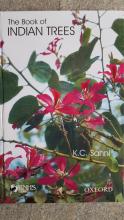
Title: The Book of Indian Trees
Author: K. C. Sahni
Publisher: Bombay NH Society & Oxford University Press
Year: 2017 (7th Reprint) Pages: 12 + 232 Rs.395/-
We depend on plants and trees for our survival - for food, clothing, shelter, furniture etc. UN Conference on Environment, held in Stockholm in 1972 marked the beginning of serious discussion about the importance of trees. The subject was discussed at length at the Rio de Janeiro Un Conference on Environment, held twenty years after the Stockholm Conference. In view of the ecological imperatives such as the urgent need to control pollution and avert global warming, the great value of trees should be understood by all.
Thus, there is a need to provide information to common people about the importance trees. This book published by BNHS and Oxford Printing Press fulfils the said need. The fact that the book is reprinted every year since 2013 strengthens this statement.
The book is intended as a popular guide describing the characteristics and distribution of trees of the Indian subcontinent. It covers 7 countries of South Asia and Southeast Asia: India, Pakistan, Bangladesh, Nepal, Bhutan, Myanmar and Sri Lanka. The main purpose of this book is to provide a means for the layman to become acquainted with the main trees of our forests and thus foster and interest in forestry and natural history.
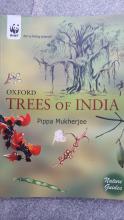
Title: Trees of India
Author: Pippa Mukherjee
Published by: Oxford University Press, New Delhi
Pages: 99 Rs.295/- First published 2008
This book describes and illustrates some of the beautiful and useful common trees of India. These trees are seen by road sides, in parks and countryside.
The book is written in a very simple language . A simple glossary has been given at the end of the book. The author rightly claims that it is meant to create interest and not to confuse either a child or a non-botanist with complex scientific terms.
The book presents 41 trees with excellent photos and illustrations. Hence, it can create an awareness and interest in both young and old alike. It also lists most important uses of trees for man, animals, birds and, most vitally, for the environment.
Some of the trees presented in this attractive book are: Neem, Badam, Babool, Coral Wood, Silk Cotton, Palmyra Palm, Flame of the forest, Casurina, Coconut Palm, Canon-ball, Gulmohar, Rain tree, Banyan, Peepal, Drumstick, Temple tree, Mast tree, Tulip, Mango, Tamarind and Teak tree.
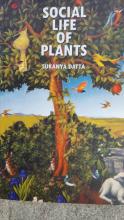
Title: Social Life of Plants
Author: Sukanya Datta
Published by: National Book Trust, India, New Delhi
Pages: 92 Rs:95/- First Edition 2000 & 5 Reprints
This book offers a startling new perspective on the world of plants, presenting an atypical point of view that ignites a sense of wonder as it explores the plant world.
For example, the exclusively nector-feeding honeyeaters, like flowerpeckers also pollinate the flowers they feed on. Along with parrots, the honeyeaters are responsible for the pollination of most of the flowering trees and shrubs in Australia. The close relationship between the birds and the flowers cannot be overestimated. Hummingbirds, orioles, shrikes, weaverbirds, sunbirds, honeyeaters, honeycreepers and other birds play a stellar role in pollination. Some flowers seem to be perfectly adapted for pollination by birds. For example, the bird of paradise flower.
The colours of the flowers serve to attract the birds to the copious supply of nectar at the base of the corolla’s tubes. The nectar of the bird-pollinated flowers is much weaker than that of insect-pollinated flowers. Researchers are of the opinion that insects are probably not attracted at all to bird-flowers.
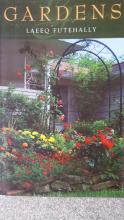
Title: Gardens
Author: Laeeq Futehally
Published by: National Book Trust, India, New Delhi
Pages:92 Rs.60/- First Edition: 1978, 3rd Edition: 1997 Reprints: 4
Gardens are said to be “lung spaces of crowded cities”. Keeping that in view, in this standard book on gardening, the author makes an attempt to discuss some of the considerations in laying out and developing a garden like social, aesthetic, horticultural and environmental. These have to be carefully balances by those whose responsibility is to create satisfactory environments in our country.
However, the book does not deal with the many-dimensional problems faced by those in charge of laying out and maintaining public gardens in India. It is not a handbook of horticultural information.
The book contains 8 pages of colour-photos and 24 pages of Black & White photos with foot-notes to drive home the issues presented by the photos. It also contains useful insights for domestic gardener.
The author is an ardent nature lover and freelance writer. Her life-long interest in garden design found fulfilment when she was in charge of landscaping and planning the two gardens of Powai and Vihar near Mumbai.
Title: Bibliography of Medicinal Plants of India
Authors: Magadi R. Gurudeva & S.N. Yoganarasimhan
Publisher: Divyachandra Prakashana, Papanna Garden, Bangalore
Year: 2009 Pages: 1024 Rs.1,000/-
Medicinal plants research in India has gained prominence during the last three decades. At the same period, the number of journals publishing information on medicinal plants has increased all over the world. As a result, it is becoming increasingly difficult for the research workers to keep track of the work carried out. Important reason for this is the inaccessibility of the journals; Consequently, many research workers are repeating the research carried out earlier.
Keeping this in view, this bibliography attempts to provide updated information till the year 2007 on work carried out in the fields of Pharmacognosy and Pharmacology of Medicinal Plants of India including some exotics/ introduced/ naturalised species.
The Bibliography contains information about 1521 species, distributed over 851 genera. The names of the plants are arranged alphabetically. For each plant, the correct name along with author citation is given in bold letters, followed by important synonyms, if any, in parenthesis. This is followed by author’s name, arranged alphabetically, year, full title of paper as mentioned in journal, name of journal with volume, issue and page numbers.

Title: Botanical And Vernacular Names of South Indian Plants
Author: Dr. Magadi R. Gurudeva
Publisher: Divyachandra Prakashana, Papanna Garden, Bangalore
Year: 2001 Pages: 1,000 Rs.800/-
Survival of human race on earth depends entirely on plants. Naturally, from ancient times, man became curious about the life and uses of plants which led to the study of plants in various ways. In the last five decades, this study has developed into several important fields like bio-diversity, Food and Agriculture, Ecology, Environment and Health, Tissue Culture, Genetic Engineering, Hydroponics, to name a few.
It is inevitable for us to be familiar with the plants surrounding us and the plants which are essential for our survival. However, plants are recognised by us, to begin with, in our own vernacular or folk name. In a country like India, where diversity is vast, several communities live in different parts of the country. The plants surrounding these diverse communities and used by them are recognised in their own language by a vernacular or folk name.
Thus, a plant with one botanical name is known by many vernacular or folk names. The value of recognising a plant with the help of a vernacular or folk name becomes clear when it is botanically identified and its usefulness to society is established.
Title: Medicinal Plants
Author: S. K. Jain
Published by: National Book Trust, India, New Delhi
Pages: 216 Price: Rs.85/-
“Medicinal Plants” by S. K. Jain presents about 100 medicinal plants of India. It includes only authentic information based on pharmacological and other experimental work.
In olden days, many people believed that medicinal plants had miraculous properties like bringing the dead back to life. As times changed, people started weighing everything with reason and several of earlier beliefs seemed unsound. As a result, the use of medicinal herbs declined.
Until 1950, few of our medicinal plants had been subjected to scientific testing and experimentation. Consequently, it was difficult to state with certainty for or against the claims of their efficacy.
Now, this book deals with important medicinal plants of India, narrating their authentic medicinal properties in a lucid manner. The book has become very popular with two revised editions (latest one in 1996) and several reprints. For each plant, botanical name along with names in several Indian languages is given in the book and this has made it very useful.
Title: Photo Guide to Selected Medicinal Plants of Karnataka
Author: K. Ravikumar and others
Publisher: Foundation for Revitalisation of Local Health Traditions (FRLHT), Bengaluru
Year: 2009 Pg: 117 Rs. 200/-
Plants support and sustain all living beings on earth. They convert carbon-dioxide to oxygen that is absolutely necessary for all lives. They play an important role in maintaining ecological balance and keep the atmosphere in balance. Human beings are dependent on plants for all their needs like food, clothing, shelter and medical care.
India has rich and diverse plant resources with about 20,000 species of flowering plants. Out of these, nearly 8,000 plant species have been recorded as medicinal and hence India is considered as “Emporium of Medicinal Plants”. About 70% of our population still depends upon these plants linked to traditional medical practices for their primary health care.
The medicinal uses of these species are recorded in the 4 codified Indian systems of medicine: Ayurveda, Siddha, Unani and Tibetan (Swa-rigpa). They are also reported in the folk traditions of different ethnic communities across the country.